
It’s 1999. You’re flipping through channels late at night and land on Food Network. A dubbed Japanese cooking show is on—Iron Chef. The announcer’s voice is dramatic, almost absurd: “The secret ingredient is…SEA URCHIN!”
Two chefs face off in Kitchen Stadium.
If my memory serves me correctly, they have exactly one hour. No recipes. No prep time. Just expert judgment, a pantry of ingredients, and a secret ingredient they didn’t know about until 30 seconds ago.
And somehow, impossibly, they create multiple dishes. Beautiful, complex, creative dishes. Under intense time pressure. While commentators analyze their every move.
If you stumbled onto Iron Chef in the late 90s, you were probably hooked immediately. This wasn’t the cooking shows we were used to. There are no step-by-step instructions, no “here’s one I made earlier,” no comforting voice telling you exactly what to do.
This was watching actual expertise unfold in real-time. Diagnosis. Adaptation. Creation under pressure.
This was chef work.
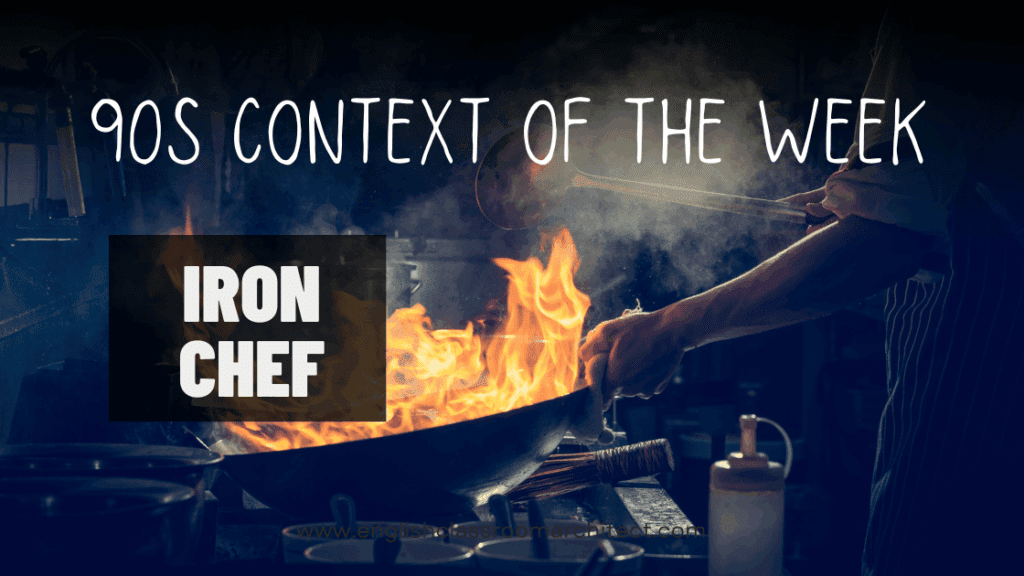
Table of Contents
Kitchen Stadium: Where Recipes Go to Die
Iron Chef premiered in Japan in 1993 and became cult viewing in the US by the late 90s through dubbed reruns on Food Network. The format was deceptively simple:
A challenger faces off against one of the Iron Chefs, each with their own specialty: French, Chinese, Japanese, or Italian cuisine. The host reveals a secret ingredient (often something bizarre: sea urchin, bell peppers, lobster, foie gras).
The chefs have sixty minutes to create multiple dishes featuring that ingredient.
No preparation. No planning. Just expertise meeting chaos.
And here’s what made it revolutionary: You could SEE the thinking.
The camera would catch a chef tasting something and immediately pivoting. The commentators (often actual culinary experts) would explain: “He just realized the texture is too firm, so he’s switching to a lighter preparation method.” Or: “They’re tasting for salt balance because this ingredient is naturally sweet.”
This wasn’t performing cooking. This was diagnostic thinking made visible.
Why This Matters for Teaching (And Why I Keep Thinking About It)
I’ve been teaching for sixteen years. And I keep coming back to this question: Why do some professional development sessions work while others feel insulting?
The difference is whether they’re training me like a line cook or treating me like a chef.
Line cook training says: “Here are the exact steps. Follow them precisely. Your job is consistent execution.”
Chef development says: “Here’s the principle behind this technique. Here’s how to diagnose when it’s working. Now adapt it to your context.”
Iron Chef is the perfect metaphor for what teaching actually is and ISN’T.
Teaching Is Kitchen Stadium
Here’s what teaching actually looks like:
You walk into class with a plan. You’ve got your lesson ready, your materials prepped, your learning objectives clear.
And then a student asks a question you didn’t anticipate.
Or the discussion goes somewhere unexpected.
Or you realize mid-lesson that half the class doesn’t have the foundation you thought they did.
The secret ingredient just got revealed.
And you have to diagnose what’s actually happening, adapt your approach, and create a solution in real-time. Because you can’t stop the clock. You can’t ask for a different ingredient. You can’t say “let me go prepare this properly and come back tomorrow.”
You’re in Kitchen Stadium. The timer is running. And your expertise is what lets you adapt.
That’s chef work.
But Here’s What’s Happening in Education
The system keeps trying to turn chef work into line cook work.
More standardization. More pacing guides. More “best practices” that assume every classroom is the same. More rubrics that reduce teaching to checkboxes.
It’s like handing an Iron Chef a recipe card and saying “Just follow this exactly. We’ve determined this is the best way to prepare sea urchin. Don’t deviate.”
That’s not cooking. That’s reheating.
And that’s not teaching either.
Why This Context Matters for Students
So why am I telling you about a 90s cooking show?
Because your students need to understand the difference between following procedures and developing expertise too.
When they ask “Just tell me exactly what you want in this essay,” they’re asking for a recipe. They want line cook instructions.
But writing isn’t line cooking. Analysis isn’t line cooking. Critical thinking isn’t line cooking.
They’re all chef work involving adapting to context, diagnosing what’s needed, and creating solutions that fit the specific situation.
And the Iron Chef metaphor makes this visible.
The Student Activity: Analyzing Expert Adaptation
I’ve created a student activity (free download below) that uses Iron Chef to teach the difference between execution and expertise:
Part 1: Watch and Identify Students watch a short Iron Chef clip (5-7 minutes) and identify moments where chefs are:
- Diagnosing (tasting, testing, evaluating)
- Adapting (changing approach based on what they discover)
- Creating (making something new rather than following a recipe)
Compare and Contrast: Students compare what they saw to recipe-following. What’s the difference between making your grandma’s lasagna from her written recipe vs. what the Iron Chefs are doing?
Transfer to Learning: Students analyze their own learning: When are they being asked to follow recipes? When are they being asked to do chef work? What skills does each require?
The Bigger Picture: Why the 90s?
This Iron Chef activity is part of my larger “90s Context of the Week” series—using cultural moments from the 1990s as strategic teaching bridges.
Why the 90s specifically? They occupy a perfect sweet spot: recent enough that footage exists and references are accessible, distant enough that students don’t have political stakes or personal defensiveness, rich enough in shared cultural moments to build contextual knowledge, and in our wheelhouse since we lived through it.
Plus, when you focus on one decade for your cultural bridges rather than scattering references across eras, you’re building thick knowledge of a specific cultural moment.
Want the full framework for this approach? Check out my 5-Day Crash Course: Teaching Literature Through 90s Cultural Bridges. You’ll get reference charts, discussion frameworks, planning templates, and the context you need to use these strategies confidently.
Download the Student Activity
Ready to try this with your students? The activity includes the viewing guide, comparison questions, and transfer analysis for applying this thinking to their own learning.
Download the “Iron Chef: Expert Adaptation” student activity
“We’re Chefs Being Treated Like Line Cooks” – This Iron Chef activity connects directly to the podcast episodes about teacher expertise vs. procedural compliance. Listen to understand why this metaphor matters. [Link to podcast]

 Skip to content