
Why do we assign essays?
Because we are measuring critical thinking and the ability to synthesize and organize a coherent and compelling argument. But now, AIs like ChatGPT can write those essays. And if you’ve assigned an essay in the last three years the chances are high that at least one student has tried to pass AI generated responses as their work off as their own.
Our first reaction was to catch them.
Table of Contents
The AI Policy Approach
Step 1: “Use AI checkers,” they said. Then we spent time running them through AI checkers, writing referrals, and having conversations where students deny having used the tool and us not really having solid proof that they did (because AI checkers are not reliable). Admin shrugged their collective shoulders.
Step 2: “Look at revision history and compare it to previous work,” they said. Then we became forensic detectives, playing the gotcha game, adding hours to a task that already took an impossibly long time to do. Tech specialists told us that we can save time elsewhere and use AI to create lesson plans.
Step 3: “Use your teacher Spidey-Sense,” they said. I am a huge advocate of teachers using the tool to know the tool. However, AI companies read the Reddit posts, too. Yes, trust your instincts—but every AI update is designed to sound more like your students. (My conspiracy theory is that OpenAI intentionally drops updates right before the school year to throw off teachers). Instinct alone won’t scale. But the AI companies still told you to rely on it (with a wink).
Step 4: “Make sure you have a clear policy and students are clear about when they can and cannot use AI,” they said. Fine, but students who are outsourcing their thinking to AI generally know they are cheating. The AI experts told us to consistently repeat steps one through four.
But here’s the problem with this process: it doesn’t solve the problem because it’s reactionary.
We lose so much when this is our strategy:
- Loss of trust: Every policy assumes students are guilty until proven innocent. False accusations are easy to make and hard to take back. One bad call, and you’ve lost not only a student’s trust in you but their belief that your assignments actually measure their learning.
- Loss of time: Running essays through detectors, combing revision histories, cross-checking drafts—it all eats hours we’ll never get back. And no, those hours don’t convert into field experience for a criminology degree (I checked).
- Loss of equity: Handwriting as a “solution” ignores the very students who need tech supports to level the playing field. It doesn’t solve inequity; it compounds it.
- Loss of energy: Whack-a-mole teaching drains us. Every ounce of energy spent on surveillance is energy we don’t get to spend on design, feedback, or actually connecting with kids. Burnout is baked into this approach, not just a side effect.
So let’s take a step back and run it back.
So again, why do we assign essays?
If the process of assigning essays is ultimately adding more work to an already labor intensive process, maybe we need to make adjustments elsewhere.
We have accepted the narrative that the answer is stronger compliance control. And if that’s the type of teacher you are then please have at it.
But if this focus on “catching cheaters” is leaving you feeling a little deflated, I have some other suggestions.
Designing With AI Awareness
Cheating happens when the product is all that matters, so what we need is to put more focus on thinking in process. I’ve heard and seen teachers put more focus on showing the steps of the writing process. But I think it goes deeper than that. What we need is more visible thinking before students get to the final product of a unit.
Collaborative Assignments
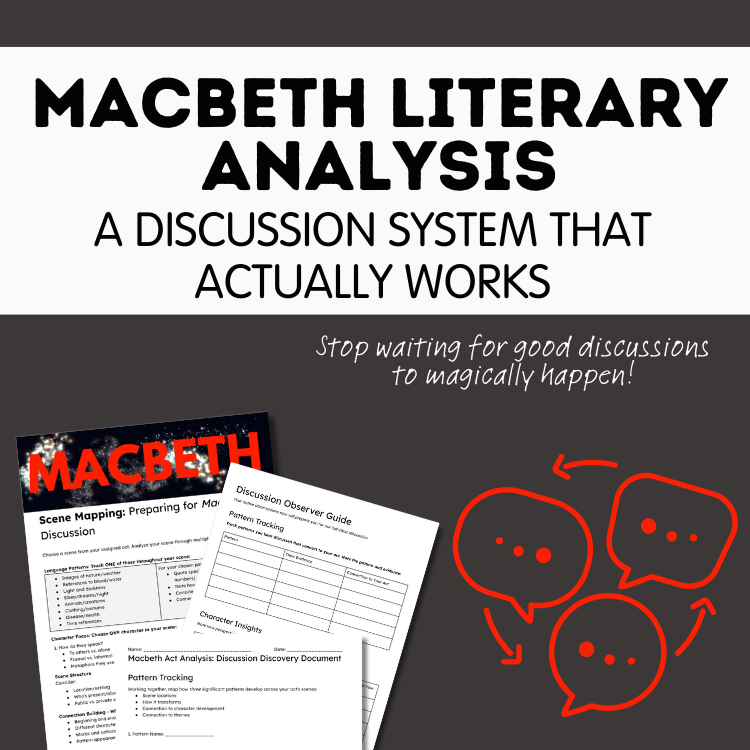
I’m using the word “collaborative” intentionally. What I’m suggesting is designing assignments where students need to put their heads together in order to complete the assignment.
Instead, ask students to come to class with an idea (either from homework or previous class work) and then in class talk to a peer and complete something new together or incorporate or respond to their idea individually. Then either just grade this new synthesized assignment or grade the two together. Grade for pattern recognition, use of evidence (from their previous assignment and from that of their peers(s), understanding of and consideration of outliers, and synthesis of information.
Flipped Classroom (for English)
I’m not necessarily suggesting a catalogue of videos students watch for homework (though, I don’t think this is a terrible idea in moderation), but instead a rethink of class time. With flipped learning, teachers use class time for activities where students will struggle the most so teachers can be active in support and problem solving.
The way I think about it is what could I give my students out of class that is simple to do, but if they don’t complete it genuinely (with their own brain) they will be unprepared for the next step? Then natural consequences kick in.
When our AI check is at the end of a process, there is only a consequence if we catch it. If we incorporate flipped learning principles students feel the discomfort earlier in the process where they can self correct early in the unit/year.
Discussion and On Demand Thinking
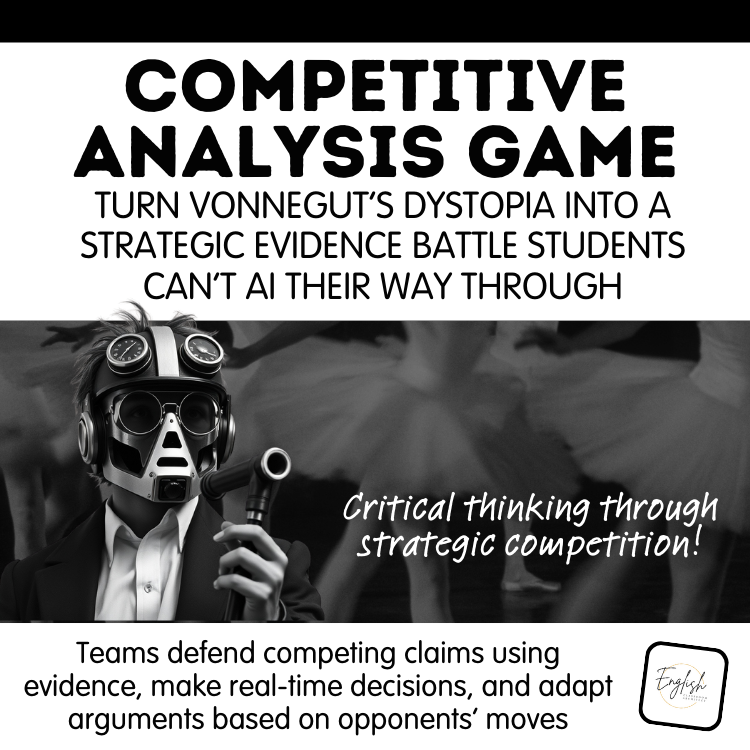
Let’s have more analysis games and Socratic Seminars. But let’s be careful. In our effort to root out cheating we cannot disincentivize slow thinking. I mean both putting slower processing students at a further disadvantage and making it so student thinking stays quick, but shallow.
Ways to extend the thinking after the on demand activity:
- Have students analyze their how well their group, or the class, or they themselves performed
- Ask students to take an idea presented during the activity and expand on it as an exit ticket
- Ask students to go back to a previous assignment and discuss their response with the new thinking of the class discussion. Focus on how new perspectives complicate or challenge their previous ideas and how new thinking illuminates and provides to nuance to broader patterns.
(Hand) Write in Class
Handwriting isn’t the solution we think it is. And here’s why.
- It’s not fair. Students with learning disabilities, especially dyslexia and dysgraphia, have learned to use technology in ways that allow them to complete assignments at the same pace as their peers.
- It’s not real-world realistic. Not everything needs to be, but are you going back to hard copy records and file cabinets? And this is where we put our students with ADHD and executive function challenges at a disadvantage because they need to keep track of more papers. I don’t know about you, but the more I assign electronically, the fewer lost/forgotten conversations I have with students (as well as accusations that I somehow lost their singular assignment even though the entire class’ papers were kept together with a binder clip).
- And it takes A LOT longer. It takes longer for students to write, and depending on student handwriting, time spent in deciphering may mean it takes longer to grade.
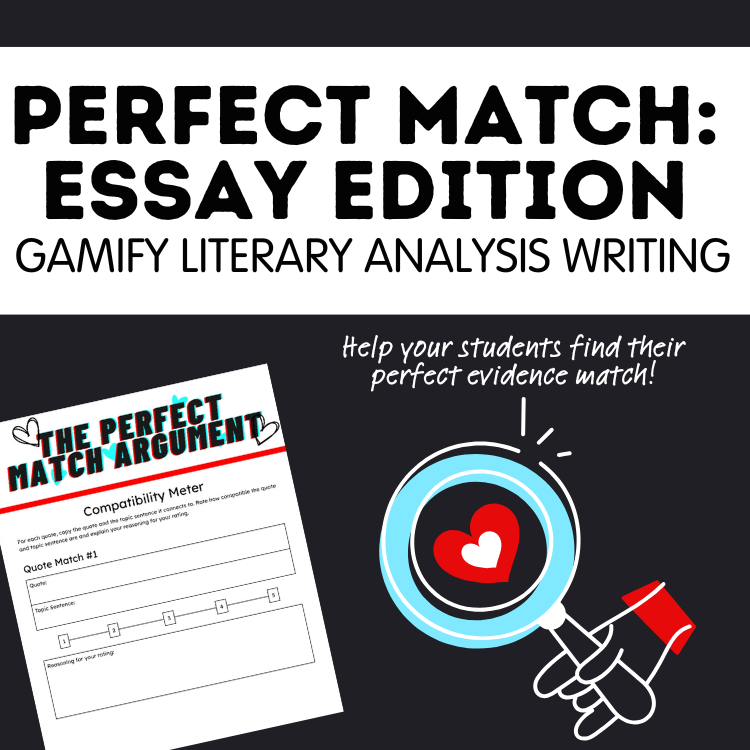
Here’s how I use it without pretending it’s a magic bullet: Hexagonal thinking, physical sorting and grouping, progressive thinking flipbooks—ways to make visible the process of thinking.
Handwriting won’t save us, but tactile thinking still matters.
Process Portfolio Assessment
Over the years, we’ve put more and more focus on mastery. And, I get it. But if AI can fake mastery, then mastery can’t be the only thing we access. The previous suggestions have given some strategies, but we can take this further in what we are assessing in the first place and put more focus on assessing the progression of thinking, which is harder to fake.
When I say portfolio assessment I do not mean putting together a showcase of best work. What portfolio assessment needs to be now is a collection of work that shows where students start, where they traveled, and where they end.
So working backwards, our assignments need to help students have a clear progression of ideas. Our assignments need to challenge previous thinking and add increasing complexity. Our assignments need more rough draft thinking and reflection and reaction to that.
Talk About AI
Finally, we need to talk about AI more. A lot more. We need to talk about the consequences, and not just what happens if we catch them. We need to talk about what increased artificial intelligence means for their future job prospects, their relationships, and their mental health. We are their guides in helping them understand their world, and to pretend AI is not going to be a part of it is disingenuous.
At this point I don’t think we need to help them use AI, but I we should be helping them think about what life with AI is and what there is to lose and gain. Because they only hear “don’t use it” from us, and meanwhile they are forming opinions about ethics and responsibility related to AI, not just from us.
I opened by asking why we assign essays anyway. I believe we have the right intentions with essays, but do they need to continue to function in the same way going forward? I am not ready to completely ditch essays, but I do think they should serve a different role now. If essays are meant to capture thinking, maybe the essay’s new role is to capture thinking-in-motion.
The strategies that make AI cheating more difficult for students are the same strategies that 40+ years of educational research show are most effective for learning. We don’t need to choose between fighting AI and good teaching. They’re the same thing. John Hattie’s research (1,200+ meta-analyses, 80 million students) shows collaborative learning, feedback, and metacognitive strategies consistently rank in top effects.
For teachers to be “AI-resistant” we don’t need to use special new tricks, we just need to use teaching practices that have always worked best.


 Skip to content